Dalian Eastern Display Co., Ltd.
Dalian Eastern Display Co., Ltd.

2025-09-13
1. Definition of FMEA
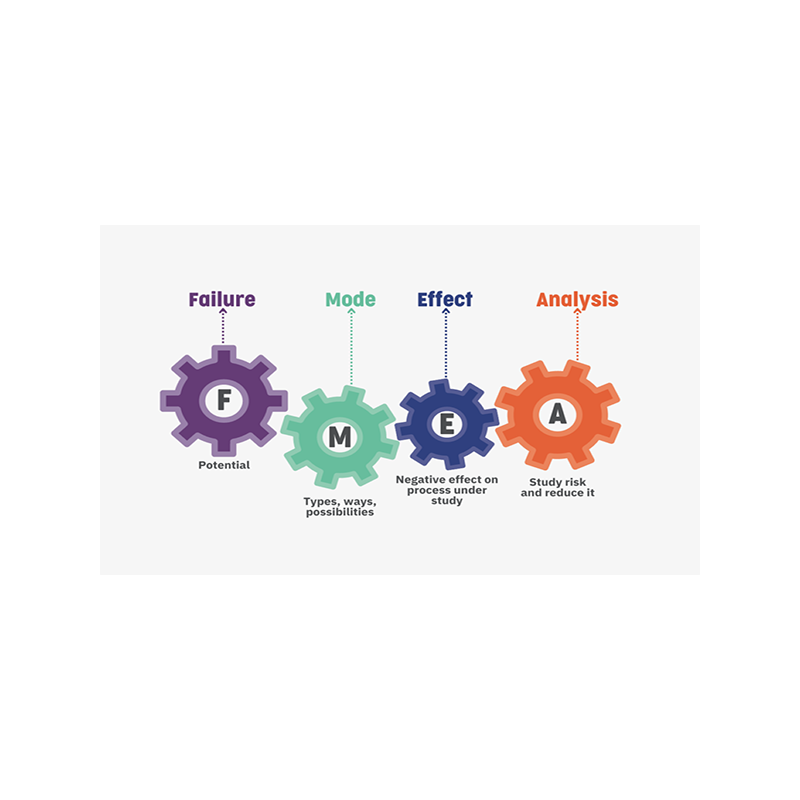
Full name: Potential Failure Modes and Effects Analysis
Essence: A systematic, team-based, tabular “spot-checking” and “error prevention” thinking process. It is not about fixing problems after they occur, but about digging them out and killing them before they occur.
Break down the name:
Potential failure: What can go wrong, break down, or fail? (e.g., a car’s brakes can fail)
Mode: How bad can it get? (e.g., the brakes are not completely gone, but soft and unresponsive when pressed)
Impact: What are the consequences of this bad thing? (For example, the car can not stop, resulting in a crash)
Analysis: Study these things systematically.
In a word: FMEA is an organization of experts, facing a product (design) or a process (production), to hold a “crow talk” conference, to imagine “where it might go wrong? How bad it would be if it went wrong?”, and then to prioritize the most terrible and likely problems.
2. The role of FMEA
Its great role is mainly reflected in “prevention”:
Prevent Catastrophic Failures: Identify “critical” risks that could lead to severe safety incidents, system failures, or significant property damage before finalizing product designs or production workflows. For instance, through FMEA analysis, we identified a circuit design with fire hazards and made necessary modifications prior to mass production. Taking our TFT and LCM products as examples, all new projects undergo FMEA evaluations to prevent major design and manufacturing errors.
Save money and time: A single error in the design or prototype phase costs just 1 yuan. If detected on the production line, fixing it might cost 1,000 yuan. But if a product is later recalled due to this issue after market release, the cost could skyrocket to 1 million yuan! This is where FMEA helps you save that crucial 1 million yuan.
Accumulate knowledge: Record the process and solutions of this “finding fault” into the company’s knowledge wealth. Next time you design a similar product, you can directly refer to it and avoid repeating the mistakes.
Promote team consensus: Let people in all departments such as design, production and quality have a unified understanding of product risks, so that everyone knows where the key points are and what the focus of follow-up work is.
3. Main controls involved in FMEA
FMEA mainly deals with two categories of things, corresponding to the two main stages of the product life cycle:
a) DFMEA-Design Failure Modes and Effects Analysis
What does it manage? It manages the design of the product itself. It focuses on “is there something inherently wrong with the design of this thing?”
Analysis object: parts, components, the design drawings of the whole product, specifications, material selection, etc.
What questions?
“Is this gear designed too thin to break?” (potential failure mode)
“Will it cause the whole machine to stall if it breaks?” (Impact)
“What caused it to break? Was it insufficient strength of the material or a calculation error?” (Cause)
“Do we have any design solutions to prevent it from breaking? Or can the system be backed up if it breaks?” (Preventive/detection measures)
Simple analogy: It’s like an architect and a structural engineer reviewing a building’s design, wondering, “Is this load-bearing beam thick enough? Will it collapse if an earthquake happens?”
b) PFMEA-Process Failure Modes and Effects Analysis
The manufacturing and assembly process. The concern is “Even if the design is perfect, will there be mistakes in production?”
Analysis object: each step of production, equipment, personnel operation, environment, etc.
for instance :
“Could a worker assemble this part and leave out a screw?” (potential failure mode)
“Will it cause the product to fall apart after a period of time if it is not installed?” (Impact)
“Why is it missing? Is the screw too small? Is the instruction manual not written clearly? Is the worker training not in place?” (Cause)
“Are there any process controls we have in place to prevent missing components? Or can we automatically detect them after assembly?” (Preventive/Proactive Measures) -> (e.g., designing tooling that blocks the product from moving to the next station until all screws are properly tightened; or using an X-ray machine for final inspection)
Simple analogy: It’s like a chef and a food safety officer reviewing the cooking process of a dish, wondering “Could I forget to put salt in the stir-fry? How do I make sure I put just the right amount of salt every time?”
How to use FMEA (RPN)
FMEA is not a brainstorming session. It has a very quantitative way of prioritizing problems and telling us which ones to solve first. This is done by calculating RPN (risk priority number).
RPN = Severity (S) × Frequency (O) × Detection (D)
Severity (S): How serious is the consequence if this failure occurs? (1-10 points, 10 being the most serious, e.g., death)
Frequency (O): How likely is this failure to occur? (1-10 points, 10 points is very likely to occur)
Detection (D): What is the probability that we will detect failure before it affects customers with current means? (1-10 points, 10 points is almost impossible to detect)
The higher the calculated RPN score, the more dangerous, likely to occur, and difficult to detect the risk, it must be prioritized!
After processing, the team needs to take new measures and then re-evaluate the scores of S, O, and D. The goal is to either reduce the likelihood of failure (O) or enhance detection capability (D) through improvements, ultimately bringing the RPN down to an acceptable low level.
sum up
What is FMEA:
A process for a proactive team to “find fault”.
Its role:
Save money, keep your safety, gain experience, and nip problems in the bud.
Its application direction:
DFMEA: The design of the pipe is not —— yet, so first pick out the flaws in the drawings.
PFMEA: The pipe [production] is not smooth —— there is no problem with the drawings, and then pick the fault in the manufacturing process.
How to use:
Use RPN as a tool to rank all the “flaws” found, and prioritize the highest scores and most dangerous problems.
In essence, FMEA is a systematic and responsible way of thinking that rejects luck and requires us to actively seek out and deal with risks. This kind of thinking is extremely important, from planning a trip to designing an airplane.
As a leading manufacturer of LCD and LCM/TFT technologies, Dalian Dongxian Electronics Co., Ltd. has been serving global partners for 35 years. Guided by the core philosophy of “Quality First, Continuous Improvement”, the company actively implements advanced quality management tools and methodologies while strengthening its hazardous substance control system. These efforts drive continuous enhancement of product quality standards.