Dalian Eastern Display Co., Ltd.
Dalian Eastern Display Co., Ltd.

2026-02-03
The technological frontiers of monochrome LCDs (Liquid Crystal Displays), particularly Segment displays, are breaking through traditional limitations from multiple angles. The core focus is exploring technological pathways that are more practical, involve lower-cost LCDs, are thinner and lighter, and evolve towards color display. The table below outlines several key technological directions for you:
| Technology Direction | Core Principle / Objective | Potential Advantages / Status |
| Colorization | Achieving color display using techniques like color filters or printing | High contrast LCD、Low power LCD、simplified structure, low cost |
| Wide Viewing Angle | Employing multi-domain alignment and orientation technologies | Achieves a 360-degree viewing angle without loss of contrast |
| Ultra-Wide Temperature | Utilizing ultra-wide-temperature liquid crystals and ultra-thin cell gap technology | Can achieve an operating temperature range of -45°C to +90°C |
| Superior Anti-Static | Employing special processes and optimizing internal LCD circuitry design | Can withstand non-contact electrostatic shocks above ±18KV, with image sticking disappearing instantly |
I. How Technology Drives Application Development
These cutting-edge technologies are driving the deepening application of monochrome/quasi-monochrome LCDs in specific fields and expanding into new scenarios:
1. Solidifying Niche Markets: Thanks to advantages such as low-cost LCDs, high reliability, UV resistance, visibility under strong light, and low cost, monochrome graphic LCDs maintain stable demand in areas like industrial control, medical equipment, automotive dashboards, security devices, and wearable devices. Market reports also predict continued growth in its market size.
2. Expanding into High-End and Emerging Scenarios:
Transparent Displays: Optical waveguide technology enables LCDs to be used in automotive Head-Up Displays (HUD), Augmented Reality (AR) devices, smart windows, etc., achieving the integration of virtual and real worlds.
High-Performance Color Displays: Technologies like color-filter-free methods and new materials aim to challenge the high-end color display market with lower power consumption and cost for LCDs, even achieving full-color displays previously unattainable for traditional LCD segment displays. Utilizing mature color printing technology, monochrome LCDs can achieve full PANTONE color gamut and gradient effects, rivaling TFT display quality at a significantly lower cost.
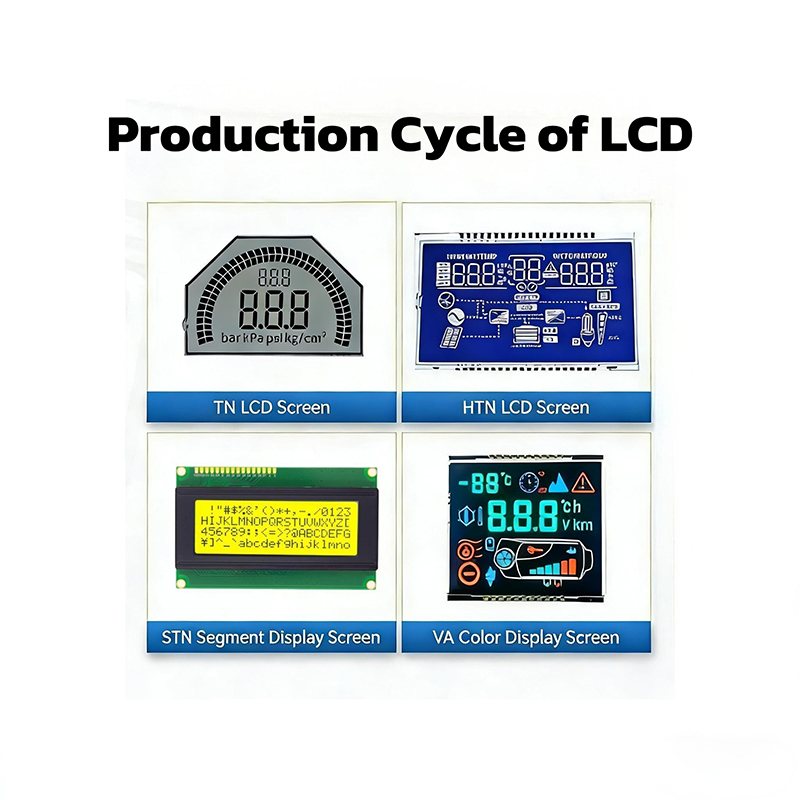
Wide-Viewing-Angle LCDs: Traditional TN LCD, HTN LCD, STN LCD, and FSTN LCD have significant limitations in viewing angle direction and range. The latest developed and mass-produced wide-viewing-angle LCDs can achieve observation from all angles, with no decrease in brightness and contrast across a 360-degree range.
On-Cell Touch LCDs: Using special LCD substrates combined with LCD driving circuits to achieve touch functionality without a separate touch film, significantly reducing costs and improving product reliability under extreme conditions.
High-Grade Anti-Static LCDs: Traditional LCDs typically achieve anti-static performance of contact discharge up to 8KV and air discharge up to 15KV, with electrostatic image sticking taking over 5 seconds to disappear. Products developed and mass-produced using the latest processes and materials can easily achieve anti-static performance of contact discharge 8KV and air discharge above 18KV, reaching a level where static electricity has no effect on the LCD or where any image sticking disappears within 3 seconds.
II. Future Trend Outlook
Overall, the future development of monochrome LCDs shows several clear trends:
Technology Convergence and Blurring Boundaries: The most notable trend is that “monochrome” technology itself is becoming a bridge to more advanced color/full-color displays. Color-filter-free and high-light-efficiency technologies are its core competitive edges.
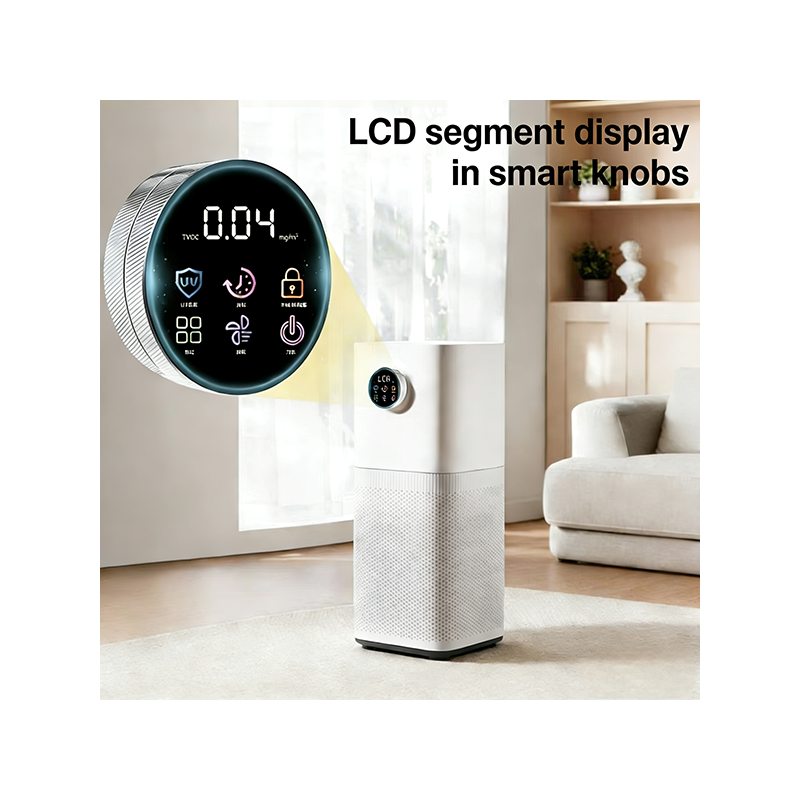
Dual Polarization in Application Scenarios: On one hand, they continue to provide reliable, economical “tool-like” value in traditional fields like industrial control (Energy meter LCD, Elevator LCD, etc.) and medical devices. On the other hand, they are pioneering “enhanced” cutting-edge applications such as smart vehicles and metaverse interaction through features like transparency, rewritability, and low power LCD.
Material and Process Innovation are Key: Whether it’s inorganic nanosheet materials, new photo-alignment processes, or more precise backlight local dimming control, underlying innovation is the fundamental driving force behind all the aforementioned developments.
If you would like to delve deeper into a specific technology (e.g., the detailed principles of color-filter-free LCDs) or the latest advancements in a particular application scenario (e.g., in-vehicle transparent HUDs), feel free to contact EASTERN DISPLAY. We can provide you with more detailed information.